Chinese Lunar Calendar 2027: Dates, Months and Leap Months
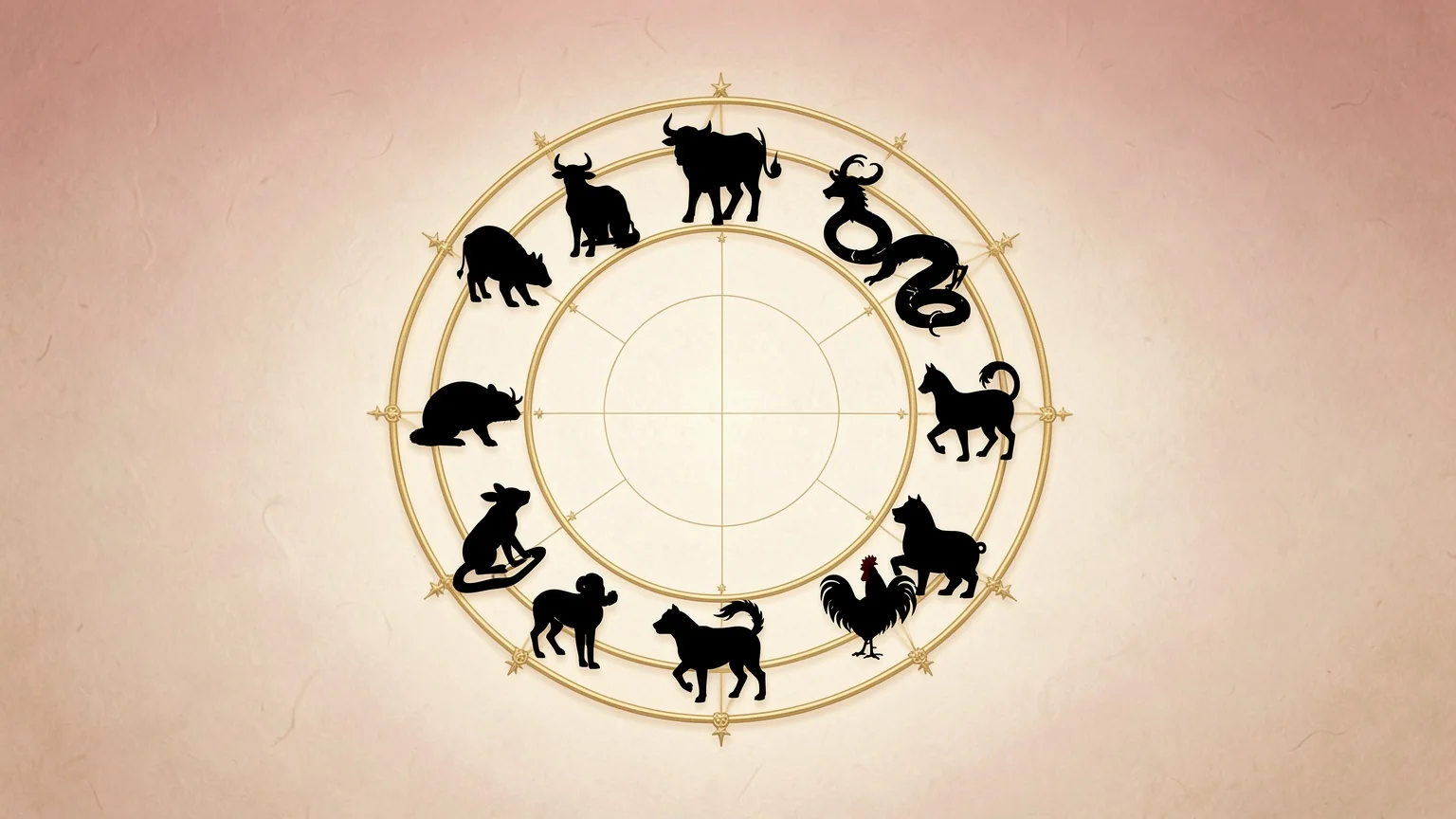
The Chinese lunar calendar 2027 is a lunisolar calendar, which means it counts months by the moon but keeps the year tied to the sun. That single design choice explains almost everything people find confusing about it: why New Year's Day moves, why the Mid-Autumn Festival is never on the same Western date twice, and why Qingming arrives within a day of the same date every April. In 2027 the first day of the first lunar month falls on Saturday 6 February, and the year belongs to the Goat, with the fire element attached in the ordinary festival reckoning.
How the Chinese lunar calendar 2027 is built
Each lunar month begins on the day of the new moon, when the moon is dark and about to reappear as a thin crescent. The middle of the month, day fifteen, is the full moon. A month therefore lasts 29 or 30 days depending on the actual interval between new moons, and no lunar month ever has a thirty-first day.
Twelve such months add up to about 354 days. A solar year is about 365. Without correction, the first month would drift roughly eleven days earlier every year, and within a few decades New Year would fall in autumn. The calendar prevents this by inserting a thirteenth month in some years, called a leap month. The rule is observational rather than arithmetic: a lunar month that contains no major solar term is repeated, so the month number appears twice in that year.
Alongside the lunar months runs a second grid of 24 solar terms, each marking fifteen degrees of the sun's apparent path and lasting about fifteen days. Li Chun, the start of spring, opens the sequence in early February. Qingming, the term associated with tomb sweeping, arrives in early April. The summer solstice, the autumn equinox and the winter solstice are three more of the twenty-four. Because these markers follow the sun, they stay within about a day of the same Western date every year.
The two grids are laid on top of each other. A date in the 2027 calendar therefore carries a lunar day and month, a solar term, and a pair of stem-and-branch characters for the year, month and day. Add the hour of birth and you have the four pillars used in chart work, which is a separate layer with its own rules.
Why New Year lands on 6 February 2027
The date of New Year's Day is the first day of the first lunar month, so it is decided by the new moon closest to Li Chun, within the constraints of the leap-month rule. The result moves inside a window of roughly three weeks: late January at the earliest, mid February at the latest. In 2027 the new moon that opens the year falls on 6 February, a Saturday.
Two dates in early February 2027 are easy to confuse, and the confusion is worth clearing up because it affects how a birth date is read. Li Chun falls on 4 February 2027. New Year's Day falls on 6 February 2027. The day before New Year, 5 February, is the last day of the old lunar year and is the day many families set aside for the main ancestral offerings. In Thailand and among Chinese communities in Southeast Asia the three days are known separately as the shopping day, the offering day and New Year's Day itself.
For festival purposes the year changes on 6 February. For chart purposes the year pillar changes at Li Chun on 4 February, because that system divides the year by solar terms rather than by lunar months. Someone born on 4 or 5 February 2027 therefore sits between two answers, and both are correct inside their own system. This is not a contradiction in the calendar; it is two different questions being asked of the same date.
Checking a date on the Chinese lunar calendar 2027
You do not need to convert anything by hand to use the calendar. A perpetual calendar keeps every year available and shows all the layers at once.
Start with the Chinese lunar calendar and almanac for daily lookups. The page opens on the current month and can be scrolled backwards or forwards without a year limit, which matters if the date you need is a birth date from decades ago.
Next, use the month arrows at the top of the grid, or type a date into the jump field and confirm it, to land on the month you want. The jump field is the faster route when you already know the exact day.
Then tap the day. A detail panel opens with the lunar date, the stem and branch of the year, month and day, the solar term the day belongs to, and the list of activities marked suitable or unsuitable for that day.
Finally, compare the lunar date with the Western date you started from. Write both down if the date matters later, because the lunar date will not repeat on the same Western date next year.
Worked example: open February 2027, tap 6 February, and the panel shows the first day of the first lunar month, a Saturday. Open April 2027, tap 5 April, and the solar term shown is Qingming, which begins a fifteen-day period rather than a single festival day.
Which festivals move and which stay put
Once the two grids are separated, the behaviour of each festival becomes predictable.
Festivals tied to a lunar date move every year. New Year's Day is day one of month one, the Lantern Festival is day fifteen of month one, the Dragon Boat Festival is day five of month five, the Hungry Ghost Festival is day fifteen of month seven, and the Mid-Autumn Festival is day fifteen of month eight. In 2027 those fall on 6 February, 20 February, 9 June, 16 August and 15 September respectively.
Festivals tied to a solar term barely move. Qingming begins on 5 April 2027 and runs for about fifteen days, so families can choose a day inside that window. Li Chun sits on 4 February. The winter solstice stays within a day of 21 or 22 December in most years.
The practical consequence is simple. If a festival has a number in its name, expect it to move. If it is named after a season or a solar marker, expect it to stay. A date copied from last year's calendar is wrong for the first group and probably right for the second.
Common mistakes when reading the calendar
The most common mistake is treating the lunar month number as if it matched a Western month. Month eight in the Chinese calendar is not August, and month seven is not July. The number counts lunar months from the start of the lunar year, so it drifts backwards against the Western calendar by about eleven days a year until a leap month pulls it forward again.
The second mistake is assuming that day fifteen of every month is a festival. Day fifteen is the full moon and many families make offerings then, but the named festivals are tied to specific months, not to every full moon.
The third mistake is ignoring the leap month. In a year with a repeated month, someone born in that month has two possible anniversaries, and a festival that falls in the repeated month can be observed in either copy depending on local custom. There is no universal rule, so the family's own practice is the authority.
The fourth mistake is using a lunar date to fix a chart year. Chart work divides the year at Li Chun, not at New Year's Day, which is why the two dates in early February matter. If you only need the festival date, the lunar date is enough; if you are building a chart, the solar term is the boundary that counts.
For the wider system that the calendar feeds into, the stem and branch cycle explains how the sixty-year count is constructed, and the Chinese almanac guide covers how the suitable and unsuitable columns are traditionally read. Readers who want the year animal in more detail can start with the Goat horoscope for 2027, which treats the same year from the animal rather than the calendar side.
Using the calendar as a lookup tool
The calendar is best treated as a reference instrument. It tells you where a date sits in two systems at once, and that is genuinely useful for family events, travel around festival periods, and any record that was written in lunar form. It does not tell you that a day is good or bad for a particular person, and no responsible reading of it would.
A workable habit is to record both dates whenever something matters: the Western date for documents and appointments, the lunar date for family customs. When the next year comes, the lunar date can be looked up again in seconds rather than reconstructed from memory.
If you want to confirm a date you already have, look up the day on the perpetual Chinese calendar and read the lunar line directly. It takes less time than any conversion formula, and it shows the solar term on the same screen, which is the part most people forget to check.
FAQ
When does the Chinese lunar calendar 2027 begin?
The first day of the first lunar month in 2027 falls on Saturday 6 February 2027. That date is New Year's Day in the festival calendar and the first day of the Goat year in everyday usage.
Does the Chinese lunar calendar 2027 have a leap month?
Whether a year carries a thirteenth month is decided year by year, not on a fixed cycle. A leap month is inserted when one lunar month in that year contains no major solar term, so the answer for 2027 has to be read from the calendar itself rather than assumed.
Why is the lunar new year on a different date each year?
Twelve lunar months total about 354 days, roughly eleven days short of a solar year. The calendar corrects the drift with leap months, so the new year moves within a window of about three weeks between late January and mid February.
What is the difference between a lunar date and a solar term?
A lunar date counts days from a new moon, so it moves against the Western calendar. A solar term marks a fixed position of the sun, so it stays within a day of the same date every year. Qingming is a solar term; New Year's Day is a lunar date.
Can I look up a date from 2027 without converting it by hand?
Yes. A perpetual calendar shows the lunar date, the stem and branch of the day, the solar term and the suitable and unsuitable activities together. Jump to the date you need and tap it, and every layer of that day appears on one screen.